

Diario de Madrid.
The works, financed and carried out by the Compensation Board of the development area, are being overseen by the Municipal Works and Facilities Department.
In addition to residential use, this phase includes land designated for an industrial park, private community facilities, office space, other tertiary uses, a shopping center, and social facilities.
The works include the creation of a large 115,280 m² park in the surroundings of the Virgen de la Torre Hermitage.
To date, the urbanization of Phase 1 has already been completed, with the first homes having been delivered, while the urbanization of Phase 3 is scheduled to be completed in December.
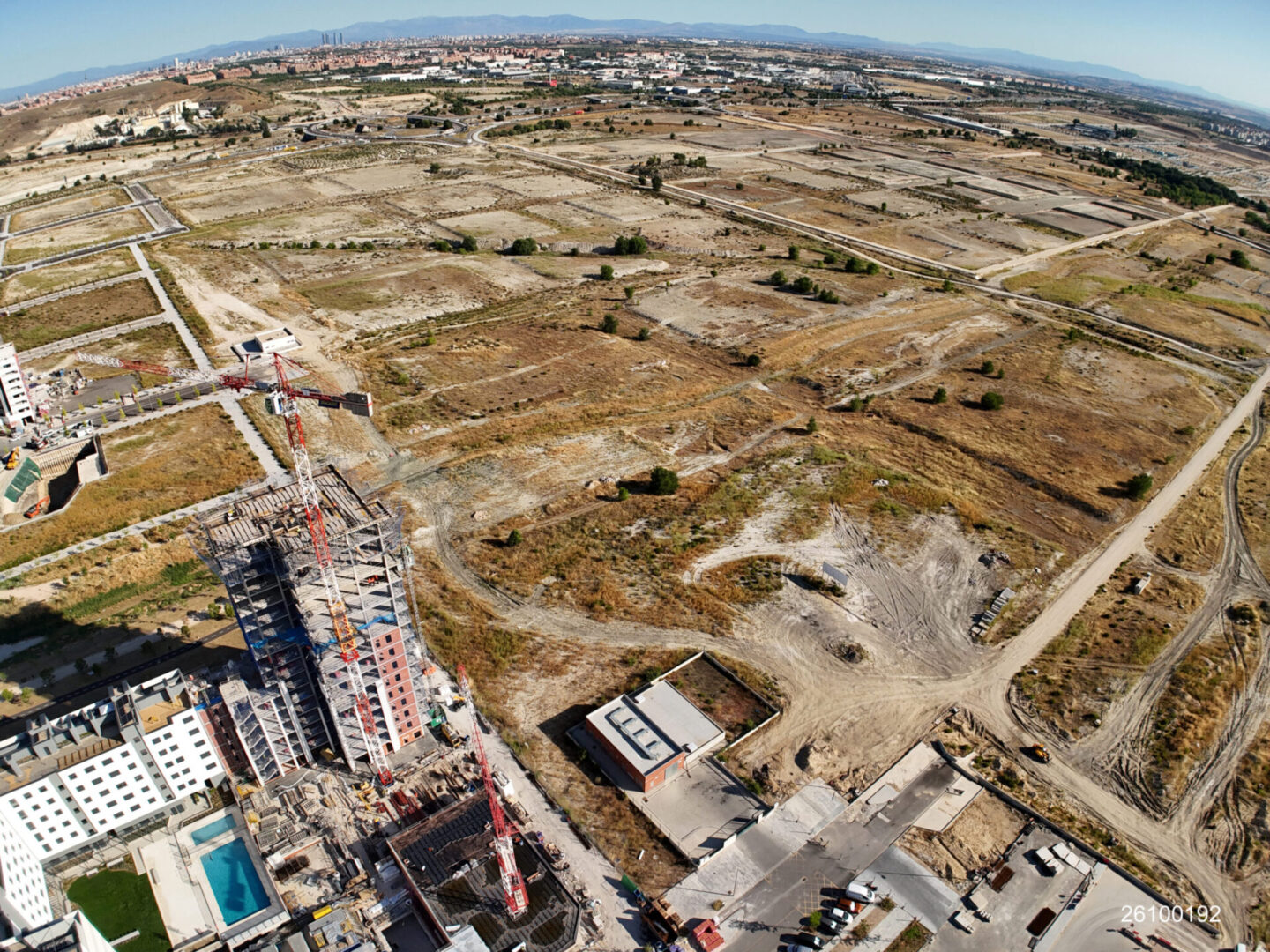
Los Berrocales, one of the new urban developments in the southeast of Madrid, is reaching a key milestone with the start of urbanization works for Phase 2, which have just begun following the signing of the site layout verification certificate. The works, with a budget of more than €128 million and an estimated duration of 36 months, are being carried out and financed by the Compensation Board of the development area under the supervision of the Municipal Works and Facilities Department.
Phase 2 of Los Berrocales concentrates the development’s most central and strategic uses. Among them is the future Civic and Commercial Center, with a land area of 104,779 m² and a gross floor area of 73,996 m², as well as the main concentration of land designated for office use, benefiting from its proximity to the future extension of Metro Line 9 to Arganda.
Covering approximately 125.5 hectares, this phase is predominantly residential in character. It also includes land designated for an industrial park, private community facilities, office space, other tertiary uses, a shopping center, and social facilities. As such, it brings together virtually all building typologies and land uses planned for the development, with the exception of single-family housing and traditional industrial uses, which are reserved for Phases 4 and 5 on the opposite side of the M-45 motorway.
More than 5,000 homes planned
Collective residential use accounts for 52.1% of the total buildable area, with plans for 5,050 homes, representing 22.7% of all housing within the development. Of these, 2,796 units (55.4%) will be market-rate housing, 1,997 units (39.5%) will be VPPL affordable housing, and 257 units (5.1%) will be VPPB affordable housing.
The total buildable area in Phase 2 exceeds 950,000 m², distributed as follows: 505,065 m² for residential use 227,624 m² for the industrial park11,231 m² for private community facilities, 93,000 m² for office use, 18,200 m² for local retail and neighborhood commercial uses
In addition, the phase will include 21 community facility plots with a combined area of 134,342 m².
The future Virgen de la Torre Park
Phase 2 will include the creation of the future Virgen de la Torre Park, designed by the renowned Spanish architect Juan Tur Mc Glone. Covering approximately 115,280 m², this new green space will provide a comprehensive restoration of the surroundings of the historic Virgen de la Torre Hermitage, a 17th-century building that is one of the most significant historical and cultural landmarks in the districts of Vicálvaro and Villa de Vallecas, and the venue for the traditional annual pilgrimage.
The project aims to strengthen the relationship between the hermitage and its landscape, improve its integration into the new urban developments, and create a major public space for social interaction and community life. The park will feature: 1,096 newly planted trees, 9,668 m² of shrub vegetation, 84,740 m² of green areas
These improvements will make a significant contribution to biodiversity, climate comfort, and the environmental quality of the area.
The project also includes the restoration and enhancement of the existing historic elm grove, which will be transformed into a large open meadow for recreation, relaxation, and cultural, social, and community events. Facilities will include: three children’s playgrounds, two calisthenics areas, one outdoor fitness circuit and several leisure and rest areas designed to promote recreation, relaxation, and social interaction
An accessible network of paths and walkways will connect the various areas of the park, facilitating pedestrian movement and harmoniously integrating the new recreational spaces with the existing historical heritage and natural landscape.
The future Virgen de la Torre Park will be integrated into the new design of the Gran Vía del Sureste, becoming one of the flagship green spaces in southeastern Madrid.
Progress of the Los Berrocales development
Urbanization works for Phase 1 have already been completed and formally accepted by Madrid City Council. Its streets and green spaces have been fully integrated into the city and are now open to pedestrians and vehicles. More than 2,100 homes are currently under construction in this phase, with the first 110 homes having been delivered at the end of last May.
The area is connected to the Ensanche de Vallecas through three bridges over the A-3 motorway and to Phases 4 and 5 through three new bridges over the M-45, which will eventually provide connections to Valderribas, Valdebernardo, and the La Dehesa and La Cuqueña industrial estates.
Meanwhile, urbanization works for Phase 3 are continuing and are expected to be completed next December. Following municipal authorization granted last April allowing urbanization and building works to proceed simultaneously, construction has already begun on more than 800 homes.
Together, Phases 1 and 3 have brought enough land to the market for the construction of 10,000 homes, 50% of which will be subject to some form of public housing protection.
A strategic project for Madrid
The Los Berrocales development includes the construction of more than 22,000 homes, half of which will be affordable housing and will be connected to the rest of the Southeastern Developments through the future Gran Vía del Sureste.
This corridor will host Madrid City Council’s future Bus Rapid Transit (BRT) system. The first section, to be built by the Municipal Works and Facilities Department in Ensanche de Vallecas, was approved by the City Government Board last week.
Total planned investment in urbanization exceeds €761 million. In addition, the project is expected to generate a significant economic impact for Madrid, contributing an estimated €12.17 billion to regional GDP and creating 161,387 cumulative jobs throughout its development.