

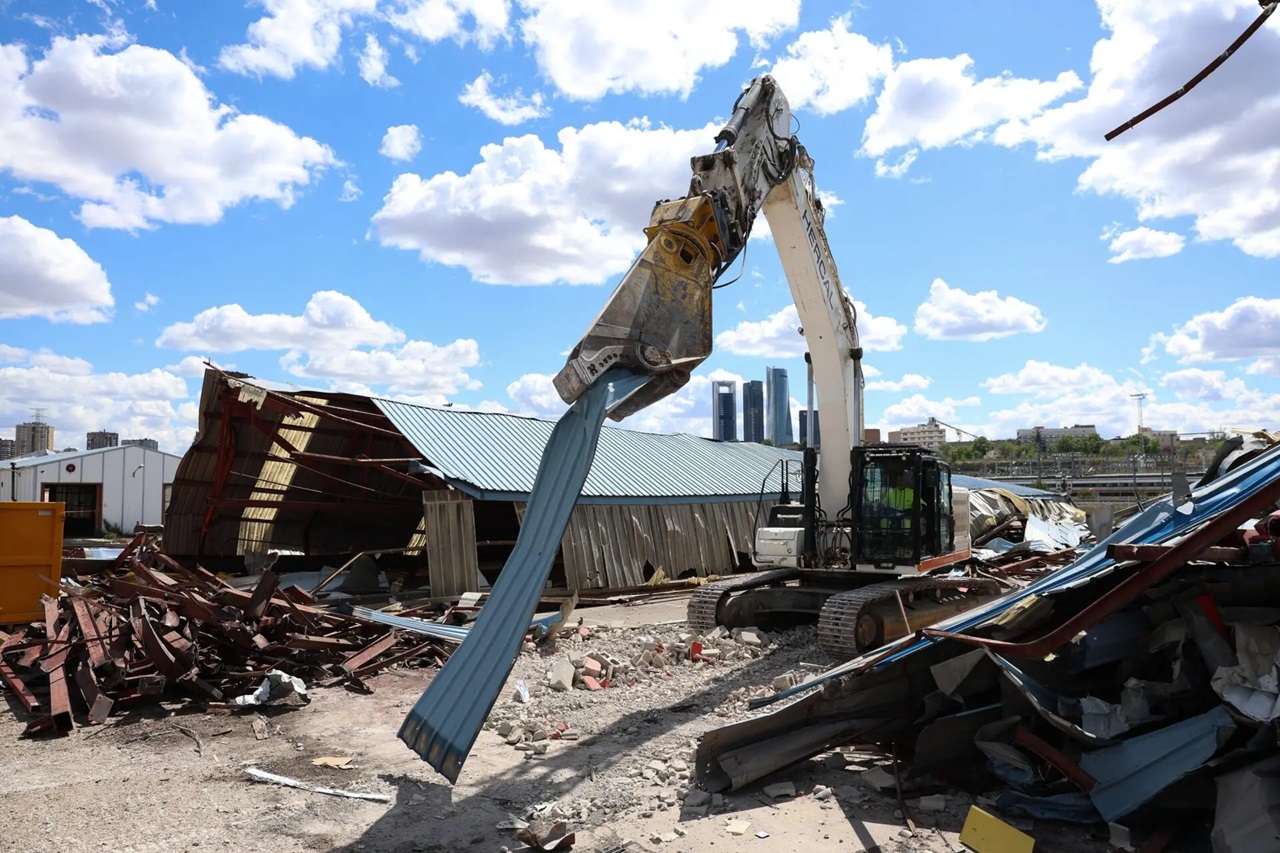
- Urbanization works have begun in this area with demolition activities that include the selective dismantling of 15 industrial buildings and site cabins, as well as the removal of the pavement from the former SEMAT storage yard.
- Seventy-six percent of the resulting materials will be reused in subsequent phases of the urbanization works. In addition, the project incorporates a set of specific measures to minimize potential disturbances to local residents.
Madrid Nuevo Norte is now underway. Following the signing of the site handover certificate on 15 April, through which Madrid City Council authorized the start of the works, demolition activities began this week in Las Tablas Oeste, the first of the four development areas to enter the construction phase, marking a milestone in the history of this urban development project.
The works now commencing form part of the preliminary activities included in the first package of urbanization works for APE 08.21 Las Tablas Oeste.
This intervention includes the selective demolition of 15 existing buildings and site cabins, as well as the removal of pavements and other built elements, with a total projected demolition volume of 15,740 cubic meters. The selective nature of the demolition is one of the most significant aspects of this phase, as it has been designed to facilitate the proper classification and management of the resulting materials. As a result, 76% of these materials (12,018 cubic meters) will be reused as fill material for trenches and embankments in future Madrid Nuevo Norte construction works.

MEASURES TO MINIMIZE THE IMPACT ON THE SURROUNDING AREA
To reduce potential disturbances during the execution of the works, the project includes a set of specific environmental control and continuous monitoring measures. These include dust-control systems through road watering and the humidification of construction areas, monitoring of airborne particulate matter, restrictions on working hours for potentially noisy activities, and continuous monitoring of noise and vibrations.
In addition, specific protocols have been established for waste management, soil and groundwater protection, as well as preventive measures relating to heritage assets, vegetation, and wildlife. The project will also be subject to permanent environmental supervision and dedicated health and safety coordination.
Once this phase is completed, the project is expected to progress gradually to the urbanization works, which will include the construction of roads, sidewalks, cycle lanes, LED public lighting, telecommunications infrastructure, green spaces, sustainable drainage systems, street furniture, and utility networks.
The urbanization plan also includes the partial decking over of railway tracks, the creation of new maintenance service access routes to the Fuencarral rail yard, and the undergrounding of the existing high-voltage overhead power line
THE FIRST MADRID NUEVO NORTE SECTOR TO ENTER DEVELOPMENT
Located on the western edge of the existing Las Tablas neighborhood, adjacent to the Fuencarral rail yard, this new sector will complete the area’s urban continuity and help strengthen its connection with the future development of the northern part of the city.
The project envisages the creation of a new mixed-use urban environment, incorporating residential areas, green spaces, public facilities, and areas for economic activity, all designed in accordance with principles of sustainability, accessibility, and urban quality.
Specifically, the sector will cover approximately 305,000 square meters, include 741 homes—37% of which will be municipally managed affordable housing—and provide more than 91,000 square meters of green space, organized around several parks and public areas that will enhance the integration of the new neighborhood with its surroundings
