

Diario de Madrid
As initially approved by the Governing Board at the initiative of the Urban Planning, Environment and Mobility Department:
The City Council will implement the new special frameworks established under Law 2/2026 on urgent measures to increase the supply of publicly protected housing, which amends Law 3/2024 on urban planning measures to promote affordable housing.
The amendment to the regional regulations expands the possibilities for converting commercial and community-use plots and allows for increased building capacity and housing density on certain plots designated for affordable housing.
The special plan excludes the development of housing only in industrial areas, due to their incompatibility with the 1997 General Urban Development Plan and the lack of the infrastructure and amenities required for residential use.
Since the law came into force in 2024, the City Council has already granted permits for 1,408 affordable housing units, while a further 3,779 units are currently being processed, bringing the total to 5,187 housing units.
The severity of the housing affordability crisis and the urgent need to increase the supply of affordable housing justify the City Council’s decision to once again implement this regional legislation, as it did in 2024. The Council believes that any measure that makes it possible to expand the stock of protected housing should be used to benefit residents, while ensuring compatibility with the urban model established by the 1997 General Urban Development Plan and the future Municipal Strategic Plan, whose initial approval is expected during the first half of 2027.
Balancing Housing Growth with the City Model
This initiative, promoted by the Urban Planning, Environment and Mobility Department, enables the implementation in Madrid of the special frameworks established in Articles 2 and 3 of Law 3/2024, following their amendment by Law 2/2026, introducing only those adaptations strictly necessary to ensure their integration into the city’s urban planning regulations.
The regional law expands opportunities for the development of affordable housing through three key changes.
First, it extends the possibility of introducing an alternative residential use—provided it is dedicated to affordable rental housing for the duration of its protected status—not only on plots designated for office use, as established under the 2024 legislation, but also on plots designated for hospitality and private community-use purposes.
Second, it introduces a new framework allowing increased density and floor area ratios on undeveloped plots earmarked by planning regulations for affordable housing, as well as on plots belonging to public land networks that are designated for publicly protected housing.
Finally, the regional legislation allows for the development of temporary accommodation schemes on certain vacant industrial plots located within consolidated urban land and integrated into predominantly residential areas. In Madrid, however, the application of this framework remains subject to its compatibility with the current urban planning model.
Accordingly, the City Council maintains the incompatibility between residential and industrial uses established by the 1997 General Urban Development Plan. As a result, plots located within industrial areas, as well as plots whose designated use coexists with industrial activity, are excluded. This decision is based both on the land-use incompatibility set out in the current planning framework and on the lack of the services, facilities, and infrastructure required for residential development.
Through this approach, Madrid facilitates the implementation of the regional legislation without altering the fundamental principles underpinning the city’s urban development model.
More Than 5,100 Affordable Housing Units Promoted
The implementation of this legislation is already having a significant impact on the creation of affordable housing in the city. It is estimated that it could ultimately enable the development of up to 20,000 new homes.
To date, the City Council has granted permits for the construction of 1,408 affordable rental housing units, while a further 3,779 units are currently at various stages of the administrative approval process. Altogether, this legislation will facilitate the development of 5,187 affordable housing units.
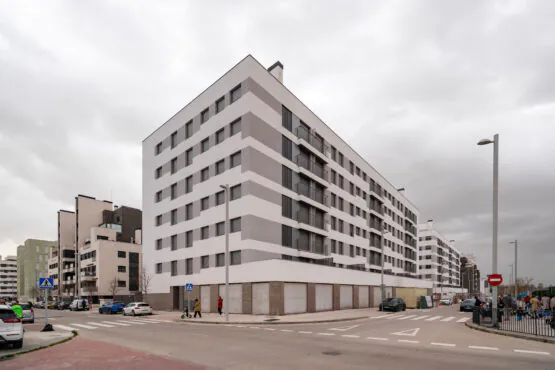
Valdebebas accounts for the largest volume of projects, with 3,739 housing units either approved or in progress (1,049 with urban planning permits, 313 with basic permits, and 2,690 under review). Additional projects are located in Los Berrocales (215 units), Ensanche de Vallecas (135 approved or in progress), El Cañaveral (124), Los Ahijones (300), the API 17.12 Carretera de San Martín de la Vega area (213), APE 09.24 Valdemarín-Este (28), and APE 20.20 Norte Torre Arias (120).
With the approval of this Special Plan, the City Council continues the strategy launched in 2024 to facilitate the construction of affordable housing through the tools made available by the Community of Madrid, adapting them to municipal urban planning regulations while ensuring their compatibility with the city’s development model.